Welcome to OOPS, my occasional reflections on the business of getting older — what catches me by surprise, what makes me think, and what seems to matter more with each passing year.
What does love look like when memory fades and personality changes? In this OOPS reflection, I share a story from our own family about what remains—and even grows—when so much else is stripped away.
It was Mothering Sunday yesterday. I was sitting with Chris in his church, listening to a sermon about love. I can’t recall much of it now, but one phrase stayed with me: the shape of love.
My father-in-law, Jeffrey*, was bright, but poverty meant he left school at 14. A perceptive manager spotted his potential and helped him keep learning—lending books, sending him on courses. Quick-minded and hardworking, Jeff rose from office boy to senior manager in a large northern manufacturing company.
In his early twenties he met Phyllis*. She was warm, sociable, full of life—everything he felt he wasn’t. They married and raised three boys. It was a traditional setup: Jeff earned and decided; Phyllis built the home and their social world. They were happy.
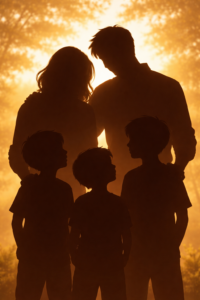
Phyllis was 83 when vascular dementia began to take hold.
Jeff responded as he always had—by trying to fix things. They moved to a retirement community. He read, researched, learned. But this was not a problem he could solve. It was a slow unravelling of the woman he loved.
Jeff could be impatient. I wondered how he would cope as Phyllis changed. But as she began to lose herself, something else in him grew.
He became gentler. More patient. More present.
When she moved into the nursing home on site, he went every day—helping her eat, sitting beside her, talking to her. In the end, she had lost almost everything that once defined her. She couldn’t speak. She couldn’t bear her hair being touched. She looked increasingly unlike the woman she had been.
But she knew who she loved.
Whenever Jeff walked in, her face lit up. She reached for him.
When she was dying, Jeff and their boys were there—holding her hand, speaking softly to her.
This, for me, is the shape of love.
A national dementia charity once described the illness as “death by a thousand cuts”. I understand why. Dementia does take so much.
But it doesn’t take everything.
Phyllis lost many parts of herself—but not her ability to love, or to draw love from others.
After she died, Jeff said that caring for her had changed him. He had become a man he hadn’t known he could be. Of course, he would have spared her those last difficult years. But he also knew they mattered.
They, too, were part of the shape of their love.