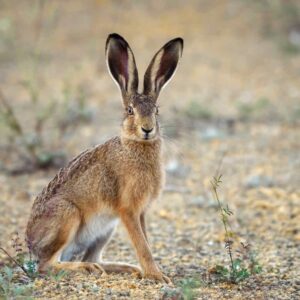
I saw a hare this morning.
The dogs and I were walking along the old railway line near our house when she leapt up from almost under my feet and bounded away across the fields. The dogs were as surprised as I was and hardly moved—but I kept a firm hold of their collars. I didn’t want her carefree run to become a panicked dash for safety.
Hares live in the fields and woods around us, so I see them from time to time. During the quiet of the pandemic I once watched two box in the middle of a field—the challenger bounding in from the wood, the other standing its ground. The dogs and I watched, equally fascinated, until the challenger broke away and ran back to the safety of the trees. A hare day is always a special day.
This morning began differently. News of war. Economic chaos. An email from my pension company warning of falling values. A quote for heating oil at double the usual cost. Chaos had become very personal.
I worried about a hospital appointment this afternoon—a small but inconvenient procedure that will lay me low for a week or so. I fretted over a couple of conversations at church yesterday where I hadn’t given people the attention they deserved, distracted by other demands. I thought of my lovely daughter Laura, exhausted after a long stretch of stressful work and in need of a break.
It’s tempting to think reality lies there—in all the anxieties and small fretful pressures of everyday life.
But the hare didn’t just provide a moment of pleasure. She shifted something—a kind of kaleidoscope turn. I saw that reality might just as much lie in the small pleasures and fleeting joys of the physical world around me, which continue whatever the wider world throws at me.
I know that when I reach the last hours of my life I won’t think, I should have listened more to the news or I should have had more hospital appointments.
I might think, I should have given more time to the people around me.
And I will certainly think, I wish I had seen more hares.